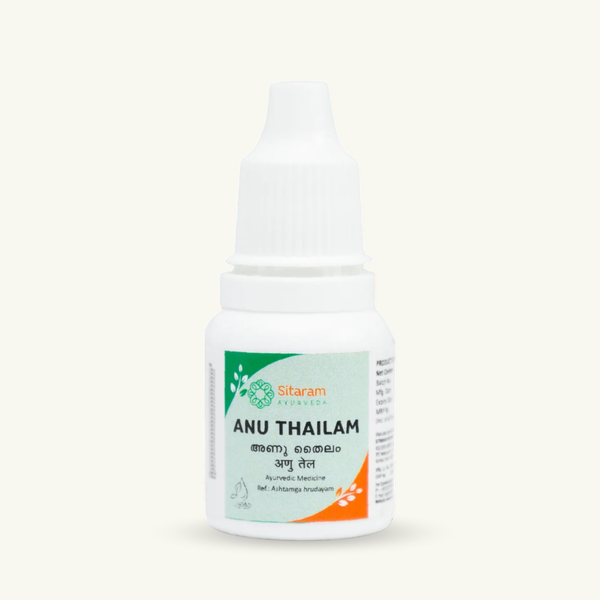
Anu Thailam (a classical Nasya oil in a sesame base) often appears in routines built around quiet and composure. In Ayurveda the head is described as a principal seat of Prana (the vital breath) and of the mind, and Nasya, the traditional instillation of a few drops of oil into the nostrils, is regarded as one gentle way of attending to this region. The mild warmth, aroma and sense of lightness that a correctly performed application brings can mark the passage from busy activity to a slower, more inward time. For external use only.
A ritual, not a rush
Many people look for a simple, tangible practice to signal the end of the working day. A short head-care sequence that includes Anu Thailam asks for a little presence, careful breathing and a few minutes of rest, which together invite a calmer pace. The oil works locally, while the ritual around it shapes the mood.
A clarity-oriented sequence
A typical sequence might begin with a gentle self-massage of the scalp, face and neck, followed by a small, practitioner-guided Nasya with Anu Thailam, and then a few minutes sitting quietly with attention on the breath. Ayurveda links steady Vata (the principle of movement among the three Dosha) in the head with qualities described in the classical texts as creative, alert and settled.
Designing a daily or weekly practice
Those who take to this approach often shape a small ritual:
- Choosing a quiet time, early morning or evening.
- Light neck and face stretches, then a brief oil massage.
- Instilling the practitioner-advised drops of Anu Thailam in each nostril.
- Resting a few minutes with eyes closed, then meditation, journalling or quiet reflection.
The ritual need not be long. Consistency matters more than duration, and over weeks the link between the oil, the practice and calm time becomes a familiar cue to slow down.
Respecting your own boundaries
As always, the quantity for Nasya with Anu Thailam should be set by an Ayurvedic practitioner, with light routines using only a few drops per nostril. It is wise not to force the practice on days when one feels very tired or unsettled. Noticing how each session feels, and easing back when something feels uncomfortable, keeps the oil in its intended role as a supportive companion.
Frequently asked questions
When is the best time to use it? A calm point in the day, morning or evening, as advised by your practitioner.
Does the ritual need to be long? No. A few consistent minutes are more valuable than an occasional lengthy session.
Where to buy Anu Thailam
Anu Thailam is available from Sitaram Ayurveda Europe, drawing on a Kerala tradition of classical preparation since 1921. Order it at sitaramayurveda.eu to make it part of your daily ritual.