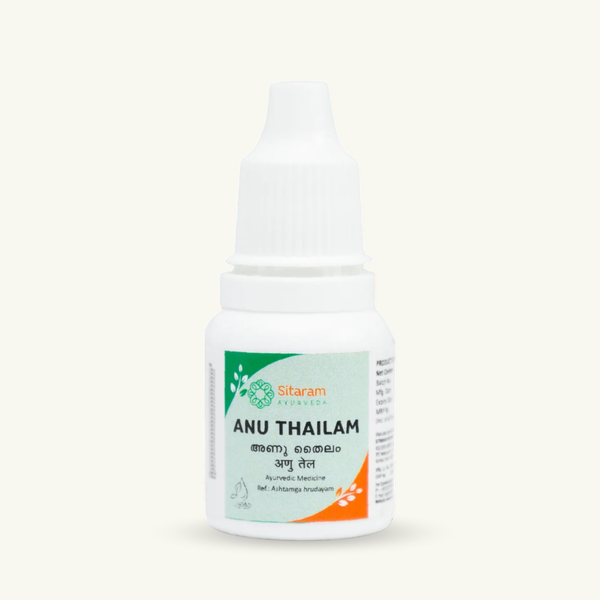
The turning of the seasons changes how the head and nose feel from one month to the next. Shifts between dry and humid air, or warm and cold spells, alter the comfort of the nasal passages. Anu Thailam (a classical Nasya oil in a sesame base) can be used, under Ayurvedic guidance, within a seasonal routine that attends to this region through lubrication and gentle aroma. For external use only.
In cooler, windier months Vata (the principle of movement among the three Dosha) is traditionally described as rising, bringing dryness and roughness to the language of the classical texts. Indoor heating can add to this. Small, regular applications of Anu Thailam, when advised, may be part of a plan to keep the area feeling settled.
The seasonal view: Ritucharya
Ayurveda encourages Ritucharya, the practice of adapting routine to the season, adjusting food, sleep, movement and self-care. For the head, this means a greater emphasis on warm oils and steam in cooler seasons and lighter routines in warmer ones. The composition of Anu Thailam suits periods when Vata is described as unsettled in the head, though the schedule should come from an Ayurvedic practitioner familiar with the local climate and the individual constitution. The principle is to work with the environment by offering complementary qualities: warmth and unctuousness in cold, dry weather, and moderation in the heat.
Everyday steps to accompany the oil
To round out seasonal head care, many people combine Anu Thailam with simple habits:
- Protecting the head and neck from cold wind with a scarf or cap.
- Avoiding sudden temperature changes, such as stepping from a hot shower into cold air.
- Keeping indoor air neither too dry nor too damp, through ventilation and gentle humidifying.
- Eating with the season, warmer and slightly unctuous in the cold, lighter in the heat.
These measures create a steady setting in which Nasya with Anu Thailam sits within a consistent pattern of seasonal self-care.
A general rhythm
For seasonal support a practitioner might advise light daily Nasya for a set number of days, or on alternate days, with small quantities, often two to three drops per nostril unless indicated otherwise. As with all Nasya, it is set aside during times of feeling unwell or immediately after heavy meals. A review at the end of a season lets both individual and practitioner decide whether to continue, adjust or pause.
Frequently asked questions
Which season suits it best? It is more often advised in drier, cooler months, and eased back in peak heat, always under guidance.
Can the schedule change? Yes. A periodic review keeps the routine responsive rather than fixed.
Where to buy Anu Thailam
Anu Thailam is available from Sitaram Ayurveda Europe, drawing on a Kerala tradition since 1921. Order it at sitaramayurveda.eu ahead of the changing season.