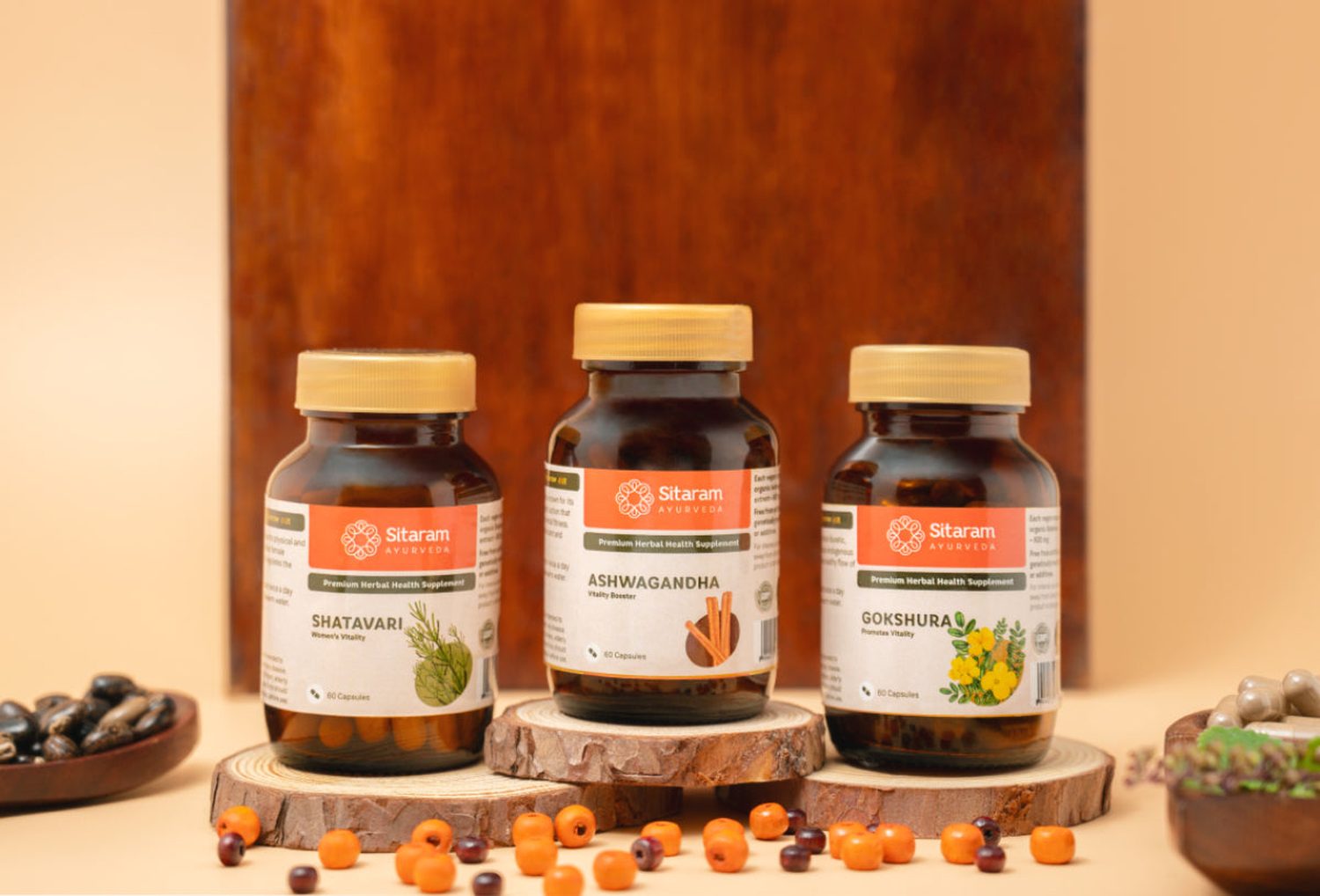
Ayurvedic preparations are living blends of botanicals, oils and, in some cases, gently fermented liquids. Across Europe's varied conditions, from humid coastal air to dry continental winters, a few simple habits help each preparation stay in good condition for the whole of its stated shelf life.
Oils and Thailam
Thailam, a classical medicated oil, is best kept simply and consistently.
- Keep bottles tightly closed after every use.
- Store away from direct sunlight and from heat sources such as radiators or ovens.
- In warm rooms, a cool cupboard is ideal. In cold conditions the oil may thicken slightly. This is entirely normal and returns to a fluid state with gentle warming of the bottle in your hands or in a bowl of warm water.
Tablets, Churnam and capsules
Dry preparations such as tablets, capsules and Churnam, a traditional herbal powder, are sensitive above all to moisture.
- Keep them dry and away from humidity. A kitchen or bedroom shelf is better than a bathroom.
- Always use dry hands or a clean, dry spoon.
- Close lids and pouches immediately after use.
Fermented tonics and Rasayana preparations
Arishtam, a traditionally fermented liquid, and Rasayana, a classical restorative preparation, each carry their own storage notes.
- Follow the storage instructions printed on the label. Many suggest a cool, dry place.
- Some households prefer to keep certain pastes cool once opened. Check whether this is advised for your specific product before doing so.
Best-before dates and batch information
Like all food supplements and cosmetics, Ayurvedic products carry best-before or expiry dates and a batch number. Please respect these dates. Do not use a product that is clearly past date, or that shows leaks, damage, or a noticeable change in colour, aroma or texture.
Frequently asked questions
My oil has turned cloudy in winter. Is it still fine? A cloudy or thicker appearance in cold weather is a natural property of botanical oils and reverses with gentle warming.
Where is the batch number? It is printed on the label or the base of the pack, alongside the best-before date, and is useful to quote in any correspondence.