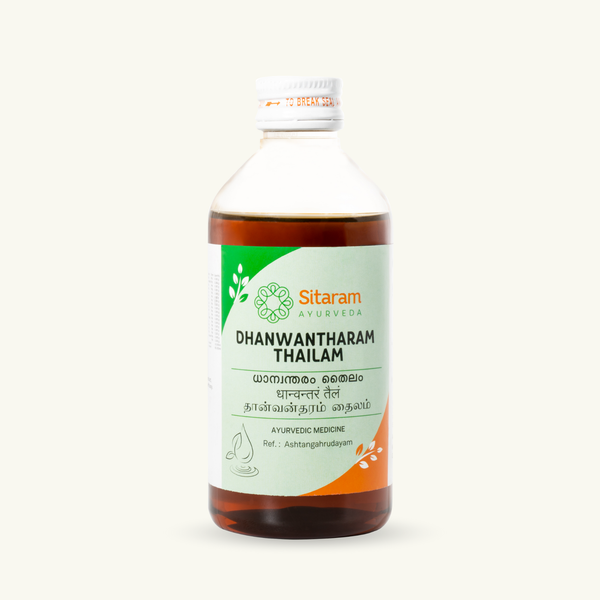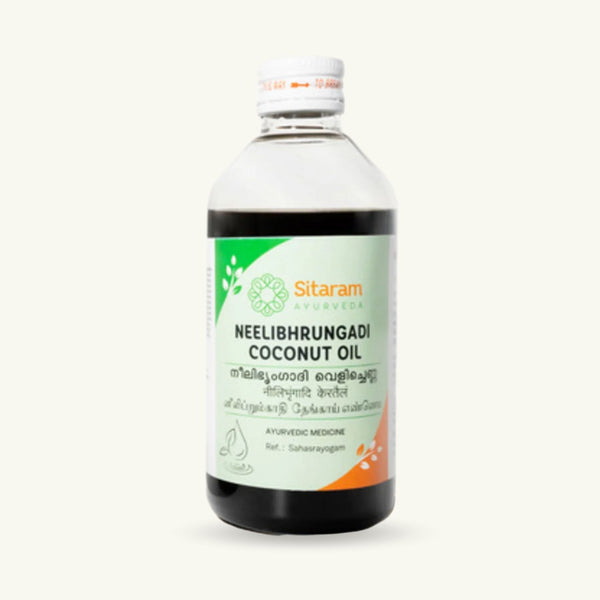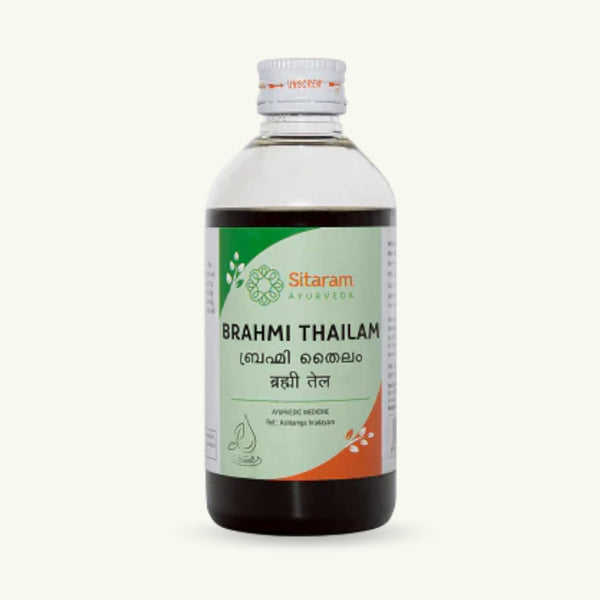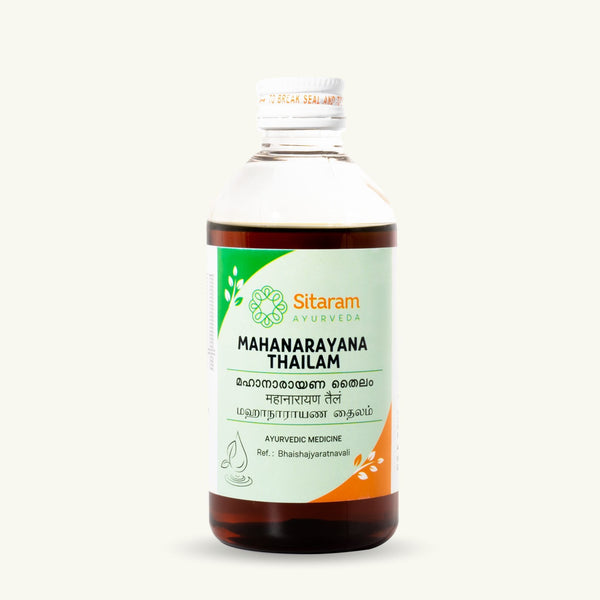
Thailam (a traditional Ayurvedic herbal oil) is far more than a simple oil. It is a classical preparation in which base oils such as sesame or coconut are slowly cooked together with herbal decoctions and pastes, producing a considered oil for daily external care.
How is thailam prepared?
In classical Ayurveda, thailam is made by gently heating oil with a herbal decoction and a fine herbal paste, allowing the water to evaporate while the qualities of the herbs pass into the oil. This slow, patient process gives each thailam its characteristic colour, aroma and texture, and it is the reason a genuine thailam differs so much from a plain carrier oil.
Different thailams for different rituals
Each thailam has its own composition and its own traditional place in the routine. Some are associated in tradition with the massage of the limbs and joints, some with the care of the skin, and others with the head and hair. The label of each product describes its herbs and its suggested use, so it is always worth reading before you begin.
Using thailam at home: Abhyanga
At home, thailam is most often used for Abhyanga (traditional oil self-massage), usually before a warm bath or shower. Warm a small amount of oil in your hands or in a water bath, apply it with slow, gentle strokes, and let it rest on the skin for twenty to thirty minutes before washing off. This unhurried practice sits at the heart of Dinacharya (the daily routine). For hair oils, follow the product instructions, since some suit overnight application and others a shorter time.
Care notes
- For external use only.
- Patch test on a small area of skin first.
- Avoid contact with the eyes and with broken skin.
- If you are pregnant, breastfeeding or under medical care, speak with your healthcare professional before using herbal oils.
Classically prepared thailams are available from Sitaram Ayurveda Europe, made in keeping with the company's Kerala heritage since 1921.