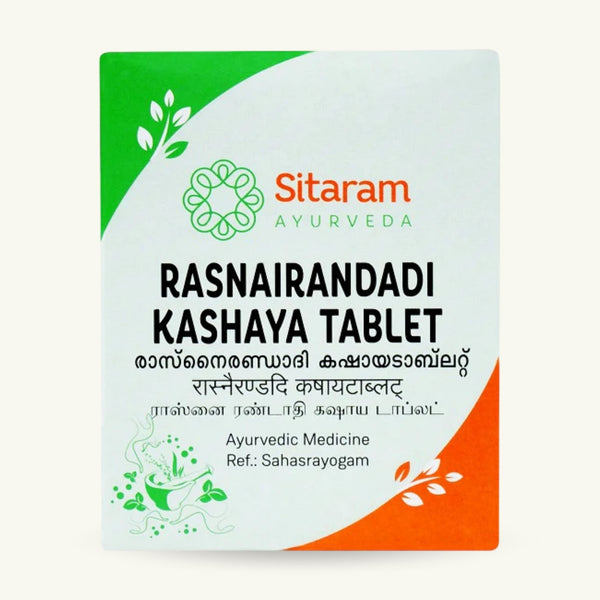
Some Ayurvedic preparations are valued less for a single moment of use and more for the quiet consistency they bring to a daily routine. Rasnairandadi Kashayam (a traditional water decoction of herbs) Tablets belong to this group, presenting a classical Kerala formula in a form that travels easily and asks little of your morning.
A classical Kashayam, made convenient
A Kashayam is traditionally prepared by simmering botanicals until a concentrated liquid remains. Rasnairandadi draws together Rasna, Eranda, Bala, Sahachara, Dushparsha and Shunti, the dried ginger, a grouping named in the classical texts. In tablet form the decoction is captured, dried and compressed, so each tablet carries a steady, measured strength of the traditional recipe without the daily task of boiling herbs.
What the tradition describes
Classical Ayurveda organises the body around three Dosha (functional principles), of which Vata governs movement and lightness. Rasnairandadi is traditionally spoken of in relation to Vata and to an active, mobile way of living. The texts frame it not as a remedy for any particular concern but as one element within a considered regimen of food, rest and gentle activity.
Within a daily routine
In the spirit of Dinacharya (the classical daily routine), the tablets are usually taken with warm water before food, at consistent times such as morning and evening. Pairing them with lightly spiced, freshly cooked meals and unhurried movement reflects the classical preference for regularity over intensity.
Rasnairandadi Kashayam Tablets are a food supplement and are not a substitute for a varied and balanced diet or a healthy lifestyle. Do not exceed the intake stated on the label. Follow the label directions or the guidance of a qualified Ayurvedic practitioner, who can consider age and individual constitution.
Questions we are often asked
How do the tablets compare with a freshly made decoction?
Both follow the same classical recipe. A decoction is prepared fresh and carries a strong taste, while the tablet is neutral, portable and simple to measure, which many people in Europe find easier to keep up from day to day.
When is it usually taken?
Most people take it before meals with warm water, at regular times. In the classical approach, steady rhythm matters more than quantity.
Who stands behind the formula?
Sitaram Ayurveda has prepared classical formulations in Kerala since 1921, working to GMP, ISO and FSSAI standards. Sitaram Ayurveda Europe brings these preparations to customers across the region.