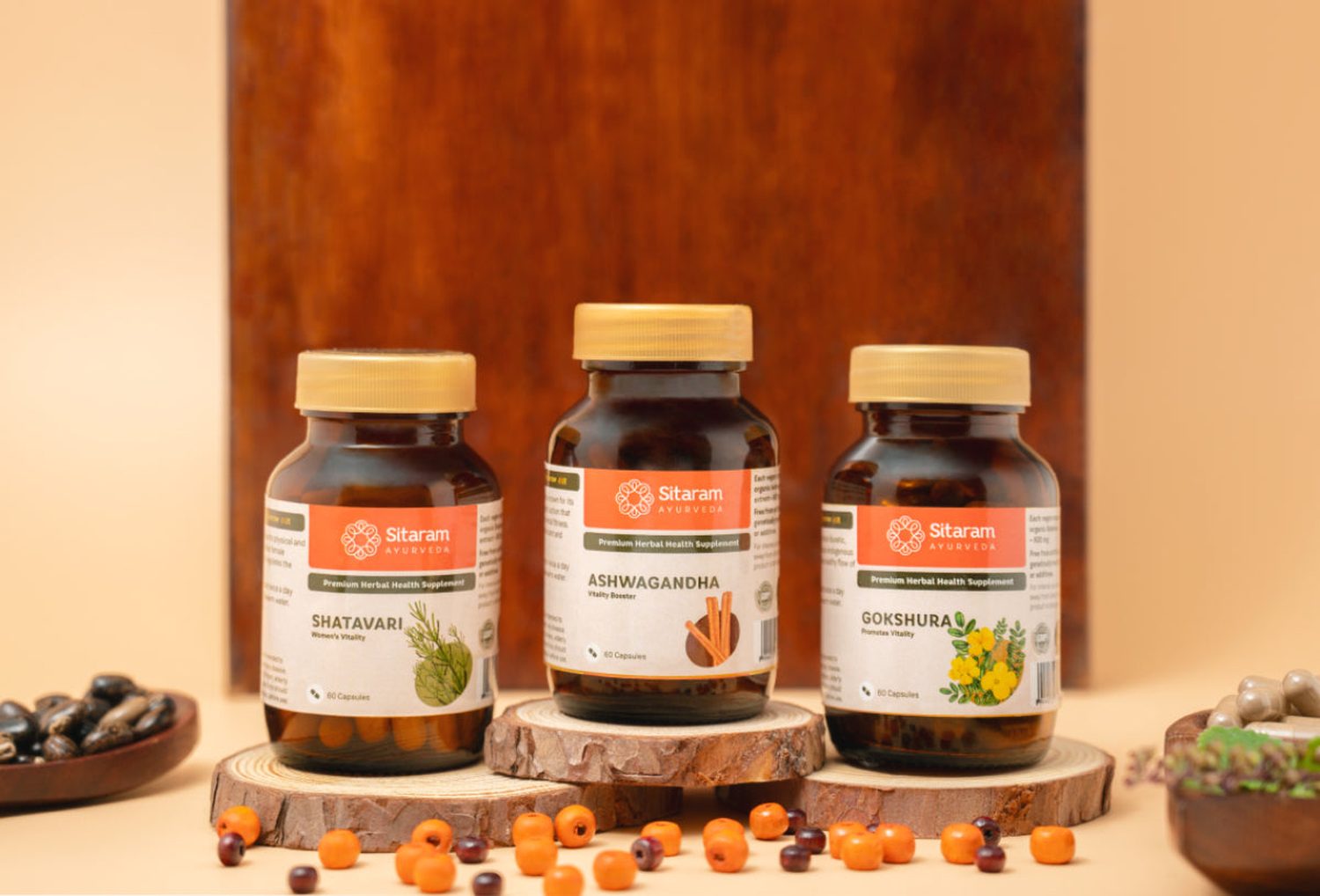
Ayurvedic labels can feel unfamiliar, especially when Sanskrit names and herbal terms are new to you. A little orientation makes them straightforward to read. Here is a simple guide for customers in the EU.
1. Product name and classical reference
Many preparations carry a traditional name, such as Varanadi Kashayam (a herbal decoction) or Dasamoola Harithaki Lehyam (a herbal paste). A mention of a classical reference text indicates that the formula is drawn from the traditional literature.
2. Full ingredient list
Always read the full ingredient list, not only the front of the pack. Ingredients may appear in Latin, English or regional names. Reading them in full helps you check for anything you prefer to avoid, whether for dietary reasons or personal preference.
3. Recommended use and serving size
Look for the details that guide everyday use:
- The suggested daily amount.
- How to take it, for example with water or or before or after food.
- Any note on the duration of use.
For food supplements, the label will remind you not to exceed the recommended intake and that the product is not a substitute for a varied and balanced diet.
4. Storage and cautions
A good label includes storage guidance, a batch number, and manufacturing and best-before dates. Cautions will note if a preparation is not suitable during pregnancy, for children, or in particular circumstances.
5. Maker and importer details
For products sold in Europe, the label should name both the original maker in India and the official importer or distributor in the EU. These details support traceability and accountability, and they are a good sign of a considered, transparent product.
Questions customers ask
Why are ingredients in Latin?
Botanical Latin names give a precise, shared reference across languages, which makes it easier to identify each herb accurately.
What if a caution applies to me?
Where a label notes pregnancy, children or particular circumstances, it is wise to speak with a qualified professional before use.