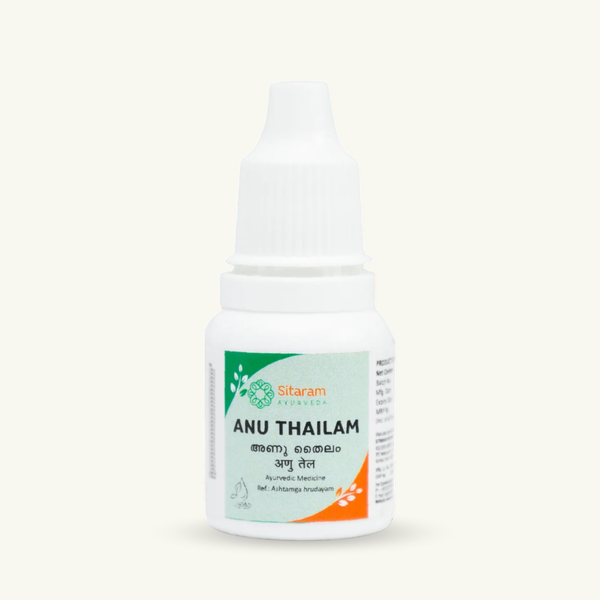
Anu Thailam (a classical oil in a sesame base) is closely tied to Nasya, one of the traditional local applications for the head, neck and sense organs. Nasya refers to placing herbal oils into the nasal passages in carefully measured amounts. Among the many oils described in the classical literature, Anu Thailam is one of the most frequently named for daily and seasonal routines that aim at a general sense of clarity and comfort. For external use only.
Today it is often introduced to people who spend long hours indoors amid dry or conditioned air. Used correctly, it becomes part of a grounding ritual that draws attention to breathing, posture and the softening of the face. Because it involves delicate structures, Nasya is always best approached with guidance.
Classical ideas behind the oil
The classical texts describe several kinds of Nasya, each with its own indications and cautions. Anu Thailam is commonly associated with the lubricating and clearing types. It is prepared by processing sesame oil with a range of herbs traditionally linked to the head and face, and is described as balancing across the three Dosha, with particular attention to Vata and Kapha in the head. Through Nasya, it is traditionally spoken of in relation to the free flow of Prana (the vital breath) and the classical concepts of srotas (channels) and marma points of the face and forehead.
Fitting it into a head-care routine
When advised by a practitioner, Anu Thailam can sit within a simple sequence:
- A gentle face and neck massage with a small amount of oil.
- A warm towel on the face, where suitable.
- Instilling the instructed number of drops into each nostril.
- A few minutes of rest, followed by slow, relaxed breathing.
Around the practice itself, comfort in the head region is also supported by limiting long screen sessions, taking regular eye breaks, keeping good posture and favouring warm, nourishing meals in keeping with Vata balance.
Guidance on quantity
For light, regular Nasya, some classical guidelines mention two to three drops per nostril, while more intensive routines belong in clinical settings. Any specific number should come from an Ayurvedic practitioner who has assessed the individual. It is traditionally set aside during times of feeling unwell, immediately after heavy meals or when very tired.
Frequently asked questions
Can I begin Nasya on my own? It is best started under the guidance of an Ayurvedic practitioner, who confirms the quantity and rhythm.
How often is it used? This varies by season and individual, from daily to a few times a week, as advised.
Where to buy Anu Thailam
Anu Thailam is available from Sitaram Ayurveda Europe, whose classical Kerala preparation reaches back to 1921. Order it at sitaramayurveda.eu for your practitioner-guided routine.