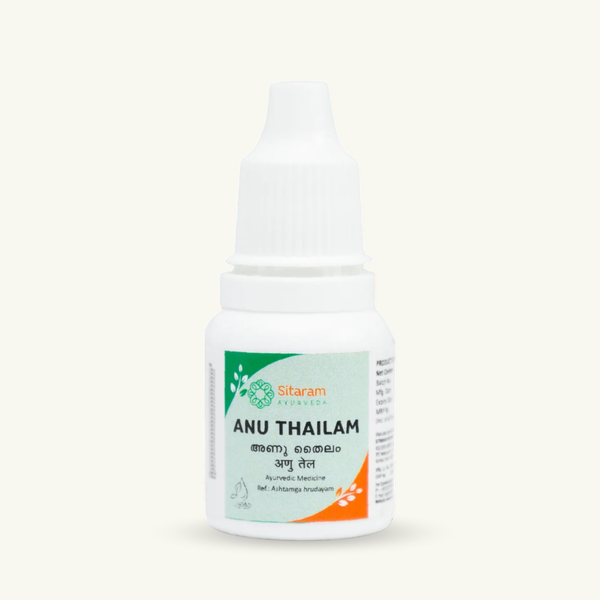
Anu Thailam (a classical medicated oil, from Thailam, meaning oil) is prepared in a sesame-oil base and is the oil most often named in connection with Nasya, the traditional practice of placing a very small, measured quantity of oil into the nostrils. In the classical texts the nose is described as a doorway to the head region, and Nasya has long been counted among the local applications cared for within a daily routine. For external use only.
The classical view
Ayurveda associates the head with Prana (the vital breath) and with Vata (the principle of movement among the three Dosha). When Vata in this region is described as unsettled, the classical language speaks of dryness, roughness and a sense of heaviness above the shoulders. Oils such as Anu Thailam were composed with herbs chosen to bring unctuousness, gentle warmth and aroma to the head and neck, in keeping with the idea of Vata and Kapha balance described in traditional terms rather than as any outcome.
A place in the daily rhythm
Within Dinacharya, the classical daily routine, Nasya with Anu Thailam is traditionally carried out in very small amounts, often a couple of drops in each nostril, and ideally under the instruction of an Ayurvedic practitioner. Classical guidance places it at a calm time, commonly the morning after cleansing the face and mouth, when the stomach is neither very full nor entirely empty. It is often preceded by a light face or neck massage.
When applying under advice, one usually lies back with the head slightly tilted, instils the instructed number of drops and rests briefly so the oil settles. Wiping away any excess around the nostrils keeps the ritual neat and comfortable.
Quantity and good sense
Because Nasya involves placing oil in a delicate area, quantity and frequency are best individualised. Traditional descriptions mention patterns such as two to six drops per nostril, yet the exact amount, timing and schedule should be set by an Ayurvedic practitioner who has considered constitution, age, climate and routine. Children, those who are pregnant and anyone with particular sensitivities should use it only under direct professional supervision. More oil is not better; correct technique matters far more than volume.
Frequently asked questions
Is Anu Thailam taken internally? No. It is for external use only, placed in the nasal passages as part of the Nasya practice.
How much should be used? Only the quantity advised by an Ayurvedic practitioner, who tailors it to the individual.
Where to buy Anu Thailam
Anu Thailam is available from Sitaram Ayurveda Europe, whose Kerala heritage in classical preparation reaches back to 1921. Visit sitaramayurveda.eu to order it for your guided routine.